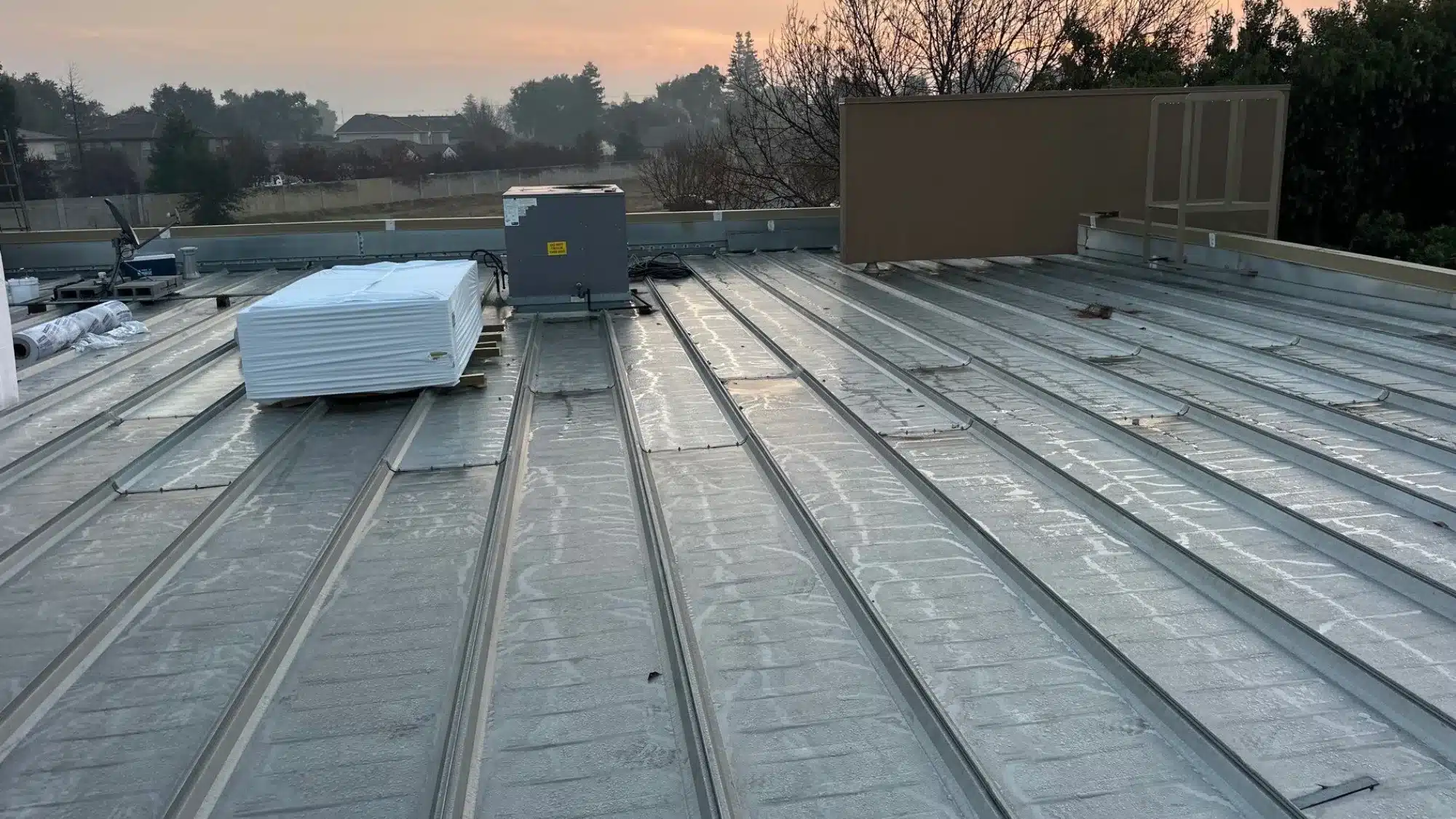
Understanding Winter’s Impact on Your Roof
Winter storms in Stockton, CA, bring a unique set of challenges for commercial and residential roofs. Heavy rain, freezing temperatures, and snow loads can push roofing systems to their limits, making roof leak repair in Stockton, CA, a top concern for property owners. The right choice of roofing coatings and membranes is critical to ensure your roof withstands these harsh conditions and prevents costly water damage.
How Modern Roofing Membranes Perform in Wet, Cold Weather
Single-ply membranes—such as TPO (Thermoplastic Polyolefin) and EPDM (Ethylene Propylene Diene Monomer)—are engineered to handle winter’s worst:
- TPO Membranes:
-
- Remain flexible in freezing temperatures, resisting cracks and splits that can lead to leaks.
- Heat-welded seams create a watertight bond, crucial for preventing water infiltration during snow and ice accumulation.
- When installed by experienced professionals, TPO can last over two decades, offering a durable barrier against winter weather.
- TPO’s reflective surface also helps with energy efficiency, keeping heating costs down during cold months.
- EPDM Membranes:
-
- Maintain elasticity even in extreme cold, reducing the risk of brittleness and premature aging.
- Their molecular structure allows them to withstand freeze-thaw cycles without cracking, making them ideal for winter protection.
- Self-adhered EPDM membranes can be installed at temperatures as low as 20°F, ensuring strong performance and quick installation even in cold weather.
Key Installation Considerations for Cold Weather
Proper installation is essential for maximizing the performance of any roofing membrane during winter:
- Membrane Relaxation:
All membranes need extra time to “relax” after unrolling in cold weather, which helps prevent wrinkles and ensures a tight seal.
- Heated Storage:
Adhesives, primers, and flashing products should be kept in heated enclosures to maintain their effectiveness below 40°F.
- Safety Precautions:
Ice and frost can remain on membranes well into the day, especially on white surfaces, increasing slip hazards for installers.
- Seam Welding:
For TPO, proper seam welding is critical in cold weather to maintain a watertight barrier. Only skilled roofing contractors should handle winter installations to avoid future leaks.
Coatings: An Added Layer of Winter Defense
Roof coatings can further enhance your roof’s resilience:
- Elastomeric Coatings:
These coatings remain flexible in low temperatures and provide an extra waterproof layer, helping to prevent leaks during freeze-thaw cycles.
- Reflective Coatings:
Reduce heat loss and help manage temperature fluctuations, minimizing the risk of ice dams and condensation.
Choosing the Right System for Stockton, CA
For property owners searching for roof leak repair in Stockton, CA, selecting membranes and coatings designed for cold, wet climates is essential. The right system will:
- Resist cracking and water infiltration during freeze-thaw cycles.
- Shed snow and ice efficiently, reducing structural stress.
- Require minimal winter maintenance, saving time and money.
Proactive Winter Roof Maintenance Tips
- Schedule regular inspections after storms to catch minor issues before they become major leaks.
- Ensure proper insulation and ventilation to prevent ice dams and moisture buildup.
- Address any signs of damage—such as punctures or seam gaps—immediately to avoid costly repairs.
Peterson Roofing Co., Inc. specializes in cold-weather roofing solutions and roof leak repair Stockton, CA homeowners trust. Our team is trained in the latest membrane technologies and installation best practices to keep your property safe and dry all winter long.
Contact us today to schedule your winter roof inspection or to learn more about how advanced coatings and membranes can protect your investment from winter storm stress.